 AI-First Culture
How AI Agents Are Replacing Manual Follow-Ups in Real Estate (And Why That's a Good Thing)
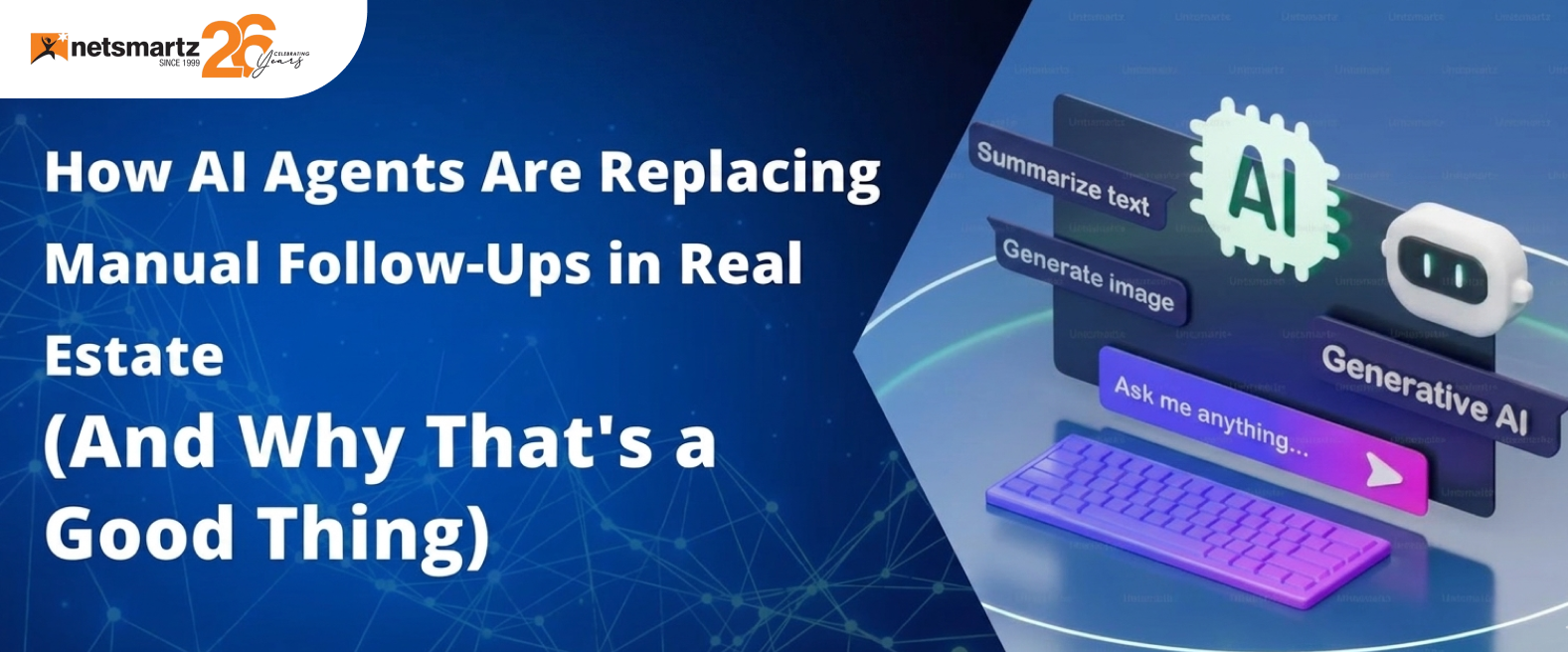
Real estate has always depended on timing, and honestly, that hasn’t changed. What has changed is how fast people expect things to happen. A potential buyer visits a website, asks a question, and expects an answer almost immediately. But in most cases, follow-ups are still handled manually. Calls get delayed, messages are missed and sometimes leads just disappear. This gap between interest and response is where many opportunities are quietly lost without anyone noticing.
That is exactly where AI agents' real estate systems are starting to make a difference. Instead of relying completely on human effort, businesses are slowly shifting toward systems that can respond instantly, track interactions, and keep conversations going without breaks. It is not about replacing people. It is more about making sure nothing slips through.
What are AI Agents and How They Are Related to Real Estate
At a basic level, AI agents are software systems that can interact, respond, and take actions based on data. In real estate, this means handling conversations, capturing leads, and managing follow-ups automatically.
With AI for real estate lead follow-up, these agents can respond to inquiries instantly, ask qualifying questions, schedule visits, and send reminders without waiting for manual input.
They are often connected to tools like Salesforce, which allows them to update data and maintain a complete record of every interaction.
Many businesses are now turning to Salesforce CRM for real estate to bring all lead interactions, follow-ups, and customer data into one connected system. It helps teams track every conversation in real time while making AI-driven follow-ups more structured and reliable.
This is where things become practical. Instead of a static website, businesses now have something that behaves more like a live assistant.
From Manual Follow-Ups to Intelligent Automation: What’s Changing
Traditionally, follow-ups in real estate have been manual, reactive, and dependent on individual effort. This often results in delayed responses, inconsistent communication, and lost leads.
With AI agents, this model shifts completely:
- From delayed responses → to instant engagement
- From manual tracking → to automated, real-time updates
- From inconsistent follow-ups → to structured, always-on nurturing
This shift is not just about efficiency; it fundamentally changes how real estate teams capture and convert demand.
What Are the Benefits
The benefits are not dramatic at first glance, but they add up quickly over time.
One of the biggest advantages is instant lead response. When someone shows interest, the system responds immediately improving the chances of conversion.
Then comes consistency. With automated lead nurturing real estate, follow-ups happen on time, every time. No one needs to remember who to contact next, which improves follow-up consistency across the pipeline.
Another important benefit is reducing effort. Tasks like sending messages, updating records, and tracking conversations are handled automatically. This supports reducing manual workload while keeping performance steady.
There is also better prioritization. Through lead qualification automation, serious buyers can be identified early, helping teams focus on leads that are more likely to convert. In many cases, the challenge is not generating leads, but managing timely follow-ups once those leads come in. A more structured approach, where responses and follow-ups are handled automatically, helps ensure that every lead is engaged at the right time without adding extra manual effort.
Finally, communication becomes smoother. With omnichannel communication, conversations can continue across chat, email, and messaging without disruption. This creates a seamless experience for buyers, regardless of where the interaction begins or continues.
Struggling to Keep Up with Real Estate Leads?
Stop missing opportunities and start converting faster with AI-powered follow-ups built for modern real estate teams.
Transform Your Lead Follow-UpsAI Marketplace and a New Way of Thinking
Some companies are now going a step further and building ecosystems around AI. This allows businesses to use ready-made AI agents, build their own, and even monetize them. Instead of treating AI as just a tool, it becomes part of the business model.
Organizations can deploy pre-built agents for sales, marketing, and operations without long development cycles. They can also create custom agents tailored to their workflows and offer them to other businesses, generating recurring revenue.
Working with a trusted Salesforce implementation partner ensures these AI-driven systems are set up correctly and aligned with real business workflows. It also helps teams avoid common setup gaps and get faster value from automation and CRM integration.
It creates a system where innovation does not stop. Businesses can keep adding new capabilities without rebuilding their core platforms.
From Manual Follow-Ups to Intelligent Automation: What’s Changing
Traditionally, follow-ups in real estate have been manual, reactive, and dependent on individual effort. This often results in delayed responses, inconsistent communication, and lost leads.
With AI agents, this model shifts completely:
- From delayed responses → to instant engagement
- From manual tracking → to automated, real-time updates
- From inconsistent follow-ups → to structured, always-on nurturing
This shift is not just about efficiency; it fundamentally changes how real estate teams capture and convert demand.
Prediction and Results
There are no assumptions about AI. Its impact is already visible across industries, including real estate.
The findings from McKinsey and Company illustrate that AI powered automation could create tremendous economic value in the real estate sector through increased productivity and reduced labour.
The information in Forbes shows that AI is now not just chat bots but is also involved in all aspects of decision making throughout the real estate workflow.
The data from The Shift AI shows measurable improvements in the number of leads that convert, higher levels of customer satisfaction and increased levels of productivity attributed to the adoption of AI in real estate transactions.
When we look at these four data points, there is a clear trend we can see. Quicker responses equal better results. Following up consistently with prospects leads to higher conversions. Automating processes reduces the number of missed opportunities.
Conclusion
Manual follow-ups have worked for years, but they were never completely reliable. There were always delays, missed messages, and lost leads.
With AI agents' real estate solutions, those gaps are becoming smaller. Responses are faster, follow-ups are consistent, and workflows feel more organized.
The shift is clear: manual follow-ups are no longer scalable in a market that demands instant engagement. AI agents are stepping in to fill that gap - bringing speed, structure, and reliability to every interaction.
It is not about replacing people. It is about supporting them in a way that makes their work smoother and more effective.
And in a field where timing can decide everything, that improvement matters more than it seems.

Frequently Asked Questions
1. What are AI agents in real estate and how do they work?
AI agents for Real Estate provide automated solutions for conversation management (engaging in conversation), follow-ups and lead qualification, capturing user interactions and keeping Customer Relationship Management (CRM) platforms up to date and providing consistency of engagement without solely relying on manual tasks to maintain engagement with customers. 
2. How do AI agents improve real estate lead follow-up efficiency?
AI agents enhance efficiency by providing immediate response, automating follow-up, and providing communication methods for continued engagement with potential customers. By having AI agents engaged in these activities and communicating with all prospects, businesses will reduce the number of missed opportunities and improve their response time while ensuring that all leads receive attention without needing to entirely rely on human resources for lead follow up and other automated processes.
3. Can AI replace human real estate agents completely?
AI will never be able to completely replace human real estate agents because real estate transactions rely upon trust, negotiation, and personal relationships to be successful. AI does support the real estate agent by providing assistance in performing repetitive tasks and therefore allows agents to focus on delivering more value through improved relationships and closing deals.
4. What role does CRM integration play in AI-powered real estate systems?
CRM Integration offers AI agents the flexibility to store, update and analyze all lead related information on a real-time basis. CRM Integration enhances pipeline visibility and improves a company's ability to track the interaction with leads while creating a more organized sales team that can make informed decisions based on updated lead information.
5. Are AI agents suitable for small real estate businesses?
For small businesses, AI agents are invaluable because they reduce total workload and help to create consistency in follow-up with leads. Even if they operate under resource constraints, small businesses will be able to manage leads effectively, respond to leads faster, and be able to compete with larger companies through automated solutions.
6. How can businesses monetize AI agents in real estate?
Businesses can create AI agent applications that meet the needs of the Real Estate industry and through marketplaces offer their customers the ability to purchase their Real Estate related AI Agents by creating and monetizing these products or solutions. These agents can be reused or shared, generating recurring revenue while also improving internal operations and efficiency.
Keep reading

Ready to build smarter? Let's talk.
Our experts are ready to help you turn ideas into production-ready AI, cloud and digital solutions.
Get in touch →Let's Discuss Your Growth Strategy
Let's discuss how we can help you accelerate growth, improve efficiency, and drive real business outcomes.