 AI-First Culture
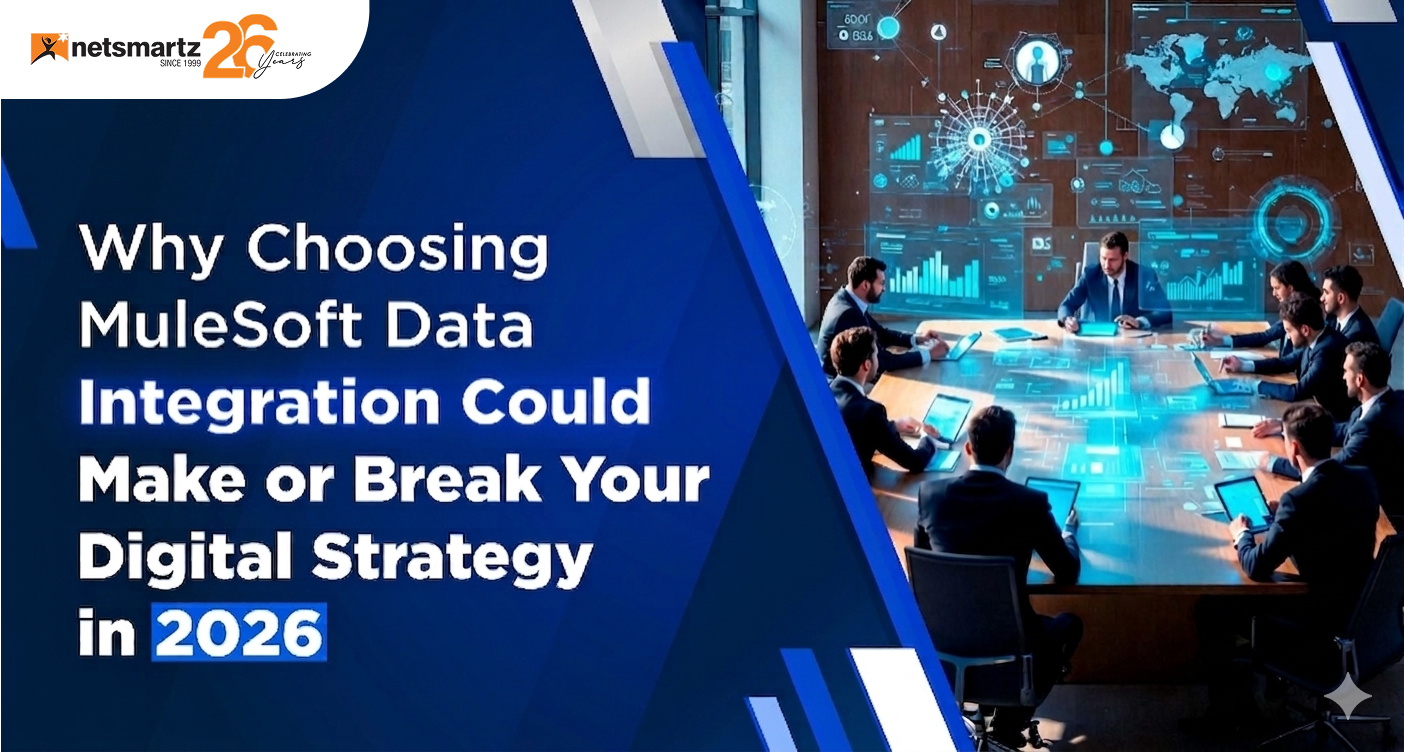
Why Choosing MuleSoft Data Integration Could Make or Break Your Digital Strategy in 2026
Executive Strategy Brief: The Data Integration Imperative
In the digital economy of 2026, the success of every major enterprise initiative—from AI adoption and hyper-personalization to supply chain optimization—rests squarely on the foundation of a modern, agile integration layer. For CIOs, CTOs, and enterprise architects, the choice of your enterprise data integration platform is no longer a tactical IT decision; it is the single most critical strategic choice determining your company's future digital speed and scalability.This analysis details the profound risks posed by fragmented, legacy architectures and explains why the MuleSoft data integration platform, built on the principle of API-led integration, offers the definitive solution for achieving real-time data integration, eliminating integration technical debt, and ensuring true AI readiness.
The 2026 Integration Crisis: The Ticking Clock of Technical Debt
Many enterprises remain hobbled by integration systems designed for a simpler, pre-cloud era. These legacy architectures are now generating a crisis that directly impacts the bottom line:- The Agility Bottleneck Traditional approaches rely heavily on brittle, complex point-to-point integrations that connect systems in a spaghetti-like web. Every time a system is updated, or a new service is launched, IT teams must spend excessive time manually updating these one-off connections.
- Impact on Digital Growth: This slows down the time-to-market for new digital products from weeks to months, crippling operational agility and allowing competitors to gain a definitive market edge. The high cost of maintaining these fragile connections is a pure consumption of innovation budget, known as Integrating technical debt.
- AI Readiness Blockade AI and Machine Learning models are data hungry. Their accuracy and trustworthiness depend on consuming unified, high-integrity data in real-time. The widespread existence of data silos in enterprises where customer, product, and financial data are inconsistent and fragmented across systems—renders complex AI models ineffective.
- Impact on Strategy: Enterprises cannot build a unified customer view, leading to poor personalization and unreliable forecasting. Without a modern enterprise data integration platform, your AI initiatives will fail to scale past the pilot phase. Data-centric integrations are no longer optional—they're the foundation of competitive advantage.
- Scalability and Hybrid Cloud Fragility
- Impact on Architecture: This forces architects to compromise on performance or security. The inability to deploy and manage integrations consistently across all environments is a fundamental weakness in the overall enterprise integration architecture.
The modern enterprise operates a mix of cloud and on-prem integration, connecting mainframes, ERP systems (e.g., SAP), Salesforce clouds, and public cloud services (AWS, Azure). Legacy tools were not designed to manage this hybrid landscape with centralized security and governance.
The Strategic Solution: MuleSoft API-Led Integration
The strategic fix for these deep-seated legacy integration challenges is a fundamental architectural shift. The MuleSoft Anypoint Platform introduces the API-led integration operating model, transforming your integration layer from a cost center into an asset-driven network.The Three Decoupled Layers
MuleSoft moves away from point-to-point code by structuring the integration landscape into three layers of reusable, governed APIs:| Layer | Function | Strategic Value |
|---|---|---|
| System APIs | Securely abstract and expose data from core systems of record (e.g., ERP, CRM, mainframes). | Creates a standardized, real-time data integration source, enabling legacy system modernization without disruption. |
| Process APIs | Implement and orchestrate reusable business logic across multiple systems (e.g., "Fulfill Order," "Update Customer 360"). | Decouples business logic from source and target systems, ensuring consistency and accelerating development using reusable APIs. |
| Experience APIs | Format data for specific consumption channels (e.g., mobile app, partner portal, IoT device). | Enables fast time-to-market for new digital services by assembling experiences from existing, governed Process APIs. |
This tiered separation is the core of a scalable integration platform. A change in a back-end system (Layer 1) no longer breaks a front-end application (Layer 3) because the Process Layer (Layer 2) acts as a stable, reusable interface.

MuleSoft Data Integration Solutions: Features that Drive Value
The MuleSoft data integration platform provides the necessary tools and governance to manage this API network, offering distinct advantages over competitors:- Centralized Integration Governance and Security: The Anypoint Platform allows architects to enforce universal security policies (OAuth, rate limiting, compliance checks) across every API in the network, regardless of its deployment location (cloud and on-prem integration). This is non-negotiable for highly regulated industries.
- API Reuse and the Anypoint Exchange: This internal marketplace is critical. It allows developers to discover, test, and consume existing APIs built by other teams. This shift from coding new integrations to assembling them from pre-built assets is how MuleSoft data integration solutions enable 3x faster IT delivery.
- The Path to Enterprise Data Mastery: By establishing a unified API layer, MuleSoft dissolves data silos in enterprises. Every system accessing data does so through a governed Process API, ensuring consistency, integrity, and the necessary data flow for advanced analytics and true AI readiness.
Practical Guidance: Evaluating Your Integration Platform Choice
Choosing an integration platform selection requires a long-term, value-driven approach. Here are the key questions technical leaders should ask:- Does the platform prioritize reuse over connectivity? If your platform encourages only point-to-point connections, you are accruing technical debt. The right solution must have a central marketplace and tools that incentivize reusable APIs.
- Is architecture truly a hybrid? Can the platform centrally manage, monitor, and govern APIs deployed on-premises (near your legacy systems) and in public cloud environments without performance compromise? For modern enterprises, this cloud and on-prem integration capability is essential.
- Does it provide real-time data integration? Batch processing and data synchronization delays are no longer acceptable. The platform must be designed to enable low-latency, event-driven data flow necessary for modern customer experiences and business decisions.
- How mature is the governance framework? Can security, quality, and compliance policies be applied universally and automatically at the API gateway layer? Robust integration governance and security are necessary to mitigate risk in a complex enterprise.
Conclusion: Partnering for Digital Resilience
The time for reactive, system-centric integration is over. The competitive landscape of 2026 demands a proactive, data-centric approach. Adopting the MuleSoft Anypoint Platform and the API-led integration philosophy is the strategic choice that eliminates technical debt, unlocks organizational agility, and lays the only reliable foundation for AI readiness and sustainable digital growth.

Frequently Asked Questions
- How quickly can we see ROI from adopting the MuleSoft API-led approach? Accelerated ROI is often achieved within 6-12 months, primarily through a significant reduction in time-to-market for new digital initiatives and a lower Total Cost of Ownership (TCO) due to the maximization of reusable APIs.
- We have significant legacy systems. Does MuleSoft require us to replace them? No. A core function of the MuleSoft data integration platform is legacy system modernization. System APIs abstract the complexity of core systems (e.g., mainframes), allowing you to expose their valuable data in a modern, secure way without disruptive replacement.
- How does MuleSoft address data silos in enterprises and ensure AI readiness? By enforcing API-led integration, MuleSoft forces data access through governed, unified Process APIs. This ensures consistency and integrity, providing the clean, real-time data stream necessary for effective AI/ML models, establishing true AI readiness.
- What is the difference between MuleSoft and traditional ETL tools? Traditional ETL focuses on data migration or bulk movement (often batch-based). MuleSoft data integration features focus on real-time data integration and exposing data as a consumable API service, enabling bi-directional, transactional data flow for business processes, not just warehousing.
- How does MuleSoft ensure security and integration governance across a hybrid cloud? The MuleSoft Anypoint Platform provides a single control plane for integration governance and security. Policies (like OAuth, rate limiting, and compliance checks) are applied centrally and enforced on APIs deployed anywhere, ensuring consistent security for cloud and on-prem integration.
Keep reading

Ready to build smarter? Let's talk.
Our experts are ready to help you turn ideas into production-ready AI, cloud and digital solutions.
Get in touch →Let's Discuss Your Growth Strategy
Let's discuss how we can help you accelerate growth, improve efficiency, and drive real business outcomes.