 AI-First Culture
 All interviews
Expert Q&A
Strategies For Managing Supply Chain Management & Much More
Josh Burwick October 4, 2023
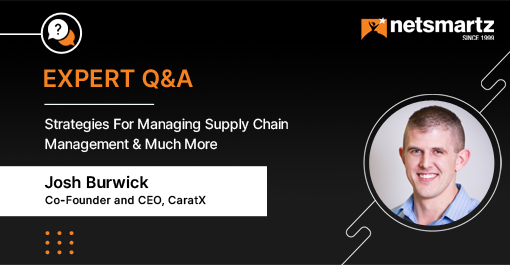
Discover the nuances of supply chain management to reduce costs while maintaining product quality and customer satisfaction.
Want to contribute to our expert insights?
Contact UsAbout Josh Burwick
Josh Burwick is a veteran operator and thought-leader whose work has shaped how modern teams think about strategies for managing supply chain management & much more. In this conversation, they unpack the frameworks and field-tested lessons behind their most recent work.
1.Can you share insights on how new companies can optimize their supply chain to reduce costs while maintaining product quality and customer satisfaction?
Demand Forecasting: Accurate demand forecasting using historical data and predictive analytics helps in aligning supply with actual demand, reducing overproduction or stockouts. You need supply chain technology partners familiar with big data to do this successfully. Supplier Collaboration: Building strong relationships with reliable suppliers can lead to better terms, reduced lead times, and cost savings through bulk purchasing. Inventory Management: Implement just-in-time (JIT) inventory strategies to minimize carrying costs while ensuring product availability. Technology Integration: Employ modern supply chain management software, e-commerce technology, and automation to streamline processes, monitor inventory, enhance reporting, and reduce errors.
Limited Resources: New companies often have limited resources. They can overcome this challenge by focusing on key suppliers, utilizing cloud-based supply chain tools, and seeking financing options. Unpredictable Demand: To tackle unpredictable demand, companies can use flexible manufacturing processes and adaptive supply chain strategies while employing the latest in e-commerce and supply chain technology partners. Companies need partners that understand their growth challenges within the supply chain. Supplier Reliability: Vet suppliers thoroughly and establish backup suppliers to mitigate risks. Scaling Up: Plan for scalability by designing a supply chain that can adapt as the business grows.
2.How can new businesses strike a balance between maintaining inventory levels and avoiding excess stock that ties up capital? What tools or methodologies do you recommend for this?
Employ an Economic Order Quantity (EOQ) model or similar to determine optimal order quantities and reorder points. Use software e-commerce tools tailored for your business to categorize products by importance and manage them accordingly. Finding the right technology partner is key in today’s business landscape. Utilize advanced inventory management software to track and analyze stock levels in real time and forecast demand for future purchases.
3.How do you believe AI technologies, such as machine learning and predictive analytics, can enhance demand forecasting for new companies trying to manage their supply chains more effectively?
Machine Learning: AI can analyze vast datasets to identify patterns and trends in demand. It can continuously learn and adapt to changing market conditions. Predictive Analytics: Predictive models can provide more accurate demand forecasts, enabling companies to optimize inventory levels and reduce carrying costs. Data Integration: AI technologies can integrate data from various sources, such as sales, marketing, and external factors, to provide a holistic view of demand drivers. Real-time Updates: AI can provide real-time updates on demand fluctuations, allowing companies to adjust their supply chain in response.
Hear From Our Experts
More interviews you might like

Expert Q&A
Revealing eCommerce, Retail Trends with AI & Much More

Expert Q&A
Strategies for Thriving in the Evolving E-commerce Landscape & Much More

Expert Q&A
Navigating Retail Success Through Focused Strategies & Much More

Expert Q&A
Leveraging Generative AI for Business Efficiency, Effectiveness & Much More

Expert Q&A
Ensuring Security and Privacy in the Age of Cybersecurity: Best Practices for Secure Communication and Much More

Expert Q&A
Achieving Rapid Business Growth: Key Factors, Cash Flow Management & Much More
Get a Free Consultation
Let's Discuss Your Growth Strategy
Let's discuss how we can help you accelerate growth, improve efficiency, and drive real business outcomes.