 AI-First Culture
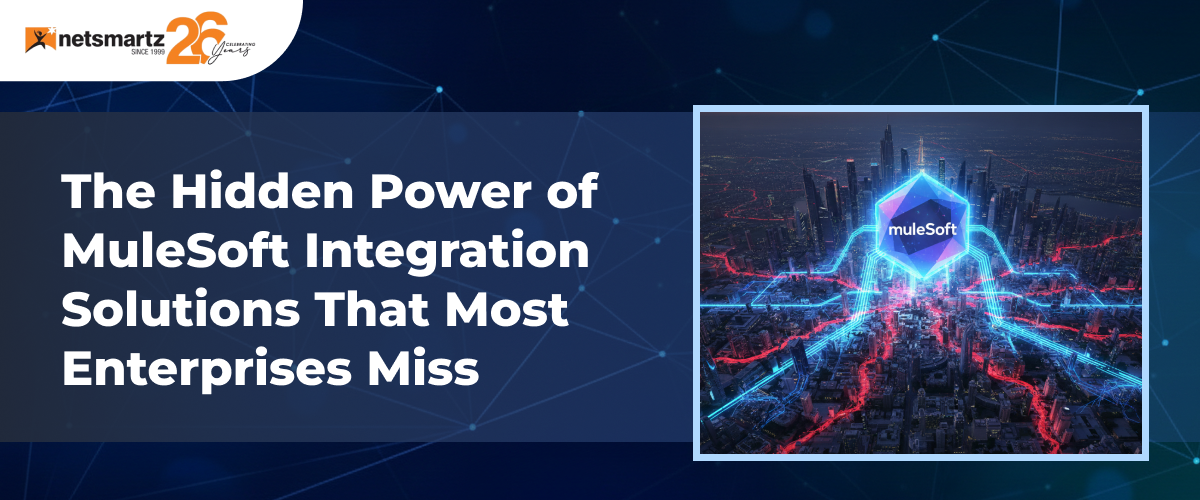
The Hidden Power of MuleSoft Integration Solutions That Most Enterprises Miss
Executive Summary: The Gap Between Connectivity and Value
For many CIOs, CTOs, and enterprise architects, integration is often viewed as a necessary, complex plumbing exercise—the tactical work of moving data between system A and system B. This traditional, system-centric view misses the profound, strategic value locked within a modern MuleSoft integration platform.
The true power of MuleSoft Integration solutions is not merely in connecting systems, but in transforming an enterprise's data and business processes into a network of reusable, governed assets. This shift from one-off connectivity to API-led integration is the key difference between a fragile digital ecosystem burdened by legacy system integration challenges and a truly scalable, agile, and future-proof enterprise.
This brief analyzes the hidden costs of underutilized integration platforms and details how the MuleSoft Anypoint Platform enables organizations to unlock exponential efficiency, agility, and massive business value that most enterprises currently overlook.
The Problem: Underutilized Integration Platforms and the Curse of Technical Debt
Organizations that treat integration as a series of point-to-point integration issues inevitably accumulate massive integration of technical debt. This debt manifests in two primary ways that cripple digital strategy:
1. Zero Asset Reuse: The Innovation Tax
In legacy environments, every new digital service (e.g., a mobile app, a partner API, a new cloud-based tool) requires developers to write net-new code to perform common tasks, such as fetching customer data from the CRM, checking inventory in the ERP, or processing a payment.
- The Cost: This approach leads to duplicated effort, inconsistent data logic, and a dramatic slowdown of IT delivery. Instead of assembling new capabilities from existing building blocks, developers are constantly coding from scratch, incurring an unsustainable "innovation tax." The failure to maximize reusable APIs is the most significant hidden value loss in enterprises today. Understanding MuleSoft Data Integration strategies is critical to breaking this cycle.
2. Integration Governance Failure: The Security and Compliance Risk
When integration is fragmented, security policies, data masking rules, and compliance checks must be manually applied across dozens, or even hundreds, of disparate connections.
- The Risk: This creates significant security gaps and makes consistent compliance (e.g., GDPR, CCPA) virtually impossible. A lack of centralized integration governance and security turns the integration layer into the weakest link in the entire security chain, particularly in complex, hybrid environments spanning cloud and on-prem integration.
The Solution: MuleSoft API-Led Integration Architecture
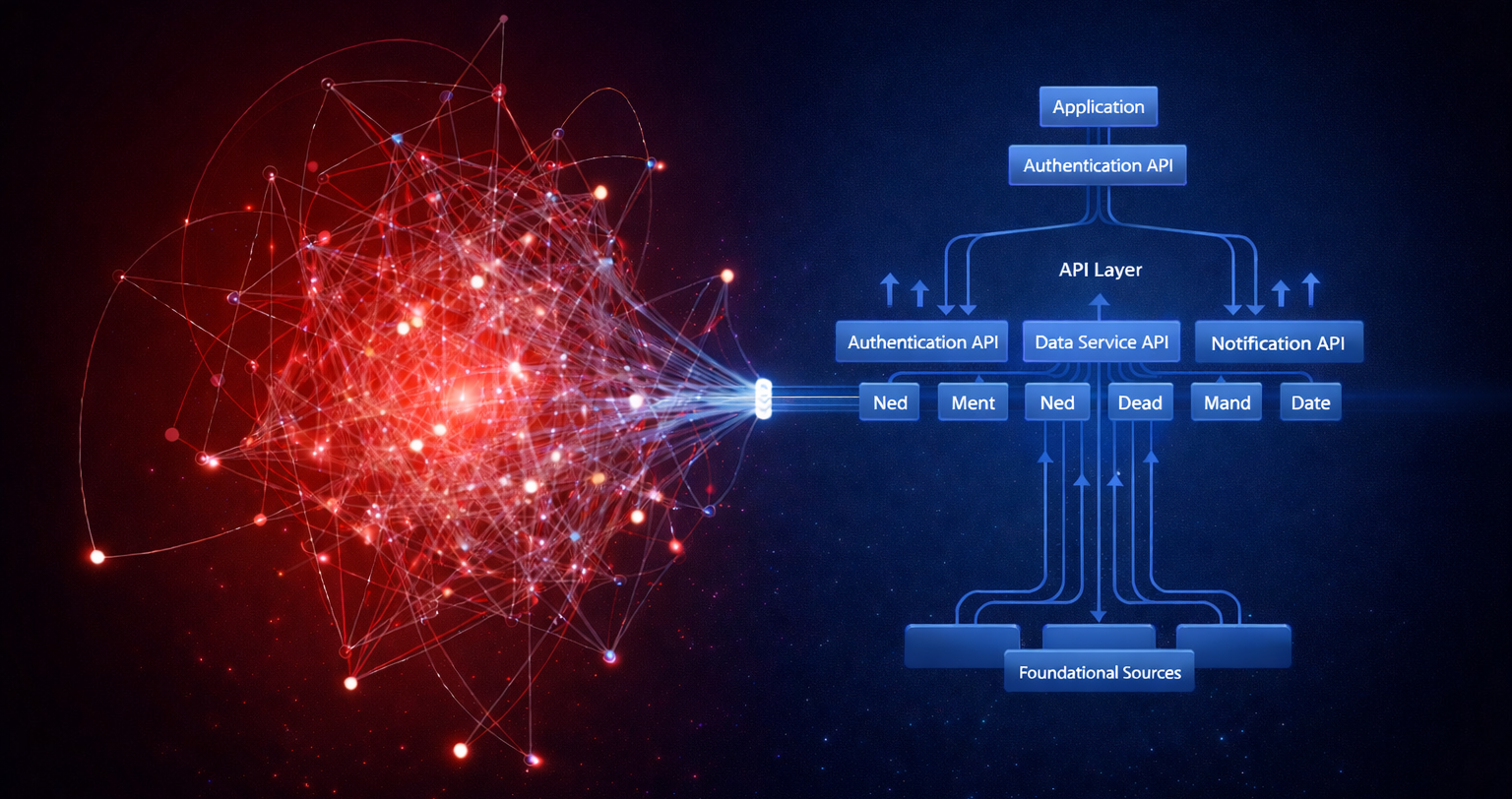
The MuleSoft integration platform is engineered to resolve these challenges by establishing Integration architecture best practices—the API-led connectivity model.
This model fundamentally decouples systems and processes, turning integration from a linear, complex problem into a modular, scalable opportunity.
The hidden power lies in the strategic intent of the three architectural layers:
| Layer | Function | Hidden Business Value Unlocked |
|---|---|---|
| System APIs | Securely expose core system data (ERP, CRM, Legacy Mainframes) in a standardized, low-level format. | Decoupling and Modernization: Allows core systems to be updated or replaced without breaking downstream applications, enabling gradual legacy system integration. |
| Process APIs | Encapsulate and orchestrate reusable business logic across multiple systems (e.g., "Fulfill Customer Order"). | Operational Agility: Creates vetted, reusable business services. Teams can assemble new functionality by calling a single Process API, drastically cutting time-to-market. |
| Experience APIs | Reformat and secure data/processes for consumption by specific channels (Mobile App, Partner Portal, Web). | Faster Time-to-Market: Enables developers to quickly create front-end experiences from existing, governed assets, accelerating enterprise digital transformation. |
Practical Examples: Unlocking Hidden Value with MuleSoft Integration
The true value of a strategic MuleSoft integration platform is best demonstrated by the capabilities it enables that were previously impossible:
Case 1: Eliminating Data Silos for a Unified Customer View
The goal of achieving a 360-degree customer view is often blocked by data silos in organizations. Customer data might reside in Salesforce (CRM), SAP (Order History), and a custom loyalty system.
- The MuleSoft Integration example: A Process API named GetCustomer360Data orchestrates calls to the three necessary System APIs, aggregates the data, cleans and validates it, and presents a single, authoritative record. Any application requiring customer data (Service Console, Marketing Cloud, Analytics Engine) consumes only this Process API.
- Hidden Value: Real-time data integration is achieved, eliminating operational inefficiencies caused by manual data reconciliation. Marketing efforts become hyper-personalized, and Service Agents gain instant, accurate context, directly improving Customer Lifetime Value (CLV). This is precisely why enterprises need Data-Centric Integrations to remain competitive.
Case 2: The "Build Once, Reuse Always" Principle
Imagine an organization needs to implement a "Check Inventory" function across its Mobile App, Partner Portal, and B2B eCommerce site.
- The MuleSoft Integration example: The core Check Inventory logic is built once as a Process API. This Process API calls the back-end ERP System API. The three consuming channels (Mobile, Partner, B2B) then each consumes this single Process API via their respective, lightweight Experience APIs.
- Hidden Value: API management MuleSoft enables a culture of reuse. When the back-end ERP system is eventually upgraded, only the low-level ERP System API needs to be adjusted; the reusable Process API and all three front-end channels remain completely unaffected. This is the definition of scalable enterprise integration.
Case 3: AI Readiness and Data Integrity
AI/ML models require huge volumes of unified, high-integrity data. Fragmented integration results in fragmented data that poisons the AI training process.
- The MuleSoft Integration example: By enforcing data quality and security standards at the API layer, MuleSoft ensures that all data feeding the AI/ML pipelines (whether from cloud and on-prem integration sources) has been validated, transformed, and governed consistently.
- Hidden Value: The organization achieves true AI readiness. Data governance becomes programmatic rather than manual, guaranteeing that AI-driven decisions are based on trusted, enterprise data integration fabric.
Conclusion: The Choice is Architectural
The distinction between merely connecting systems and building a reusable, API-led network is the defining architectural choice of the digital era. Remaining dependent on ad-hoc, point-to-point integration issues are a choice to prioritize short-term fixes over long-term scalable enterprise integration.
The MuleSoft integration platform provides the definitive framework for moving beyond legacy constraints, transforming technical debt into digital assets, and unlocking the hidden value in enterprise integration. By embracing API-led integration, enterprises secure the integration governance and security foundation required for continuous digital growth and operational excellence.
Next Steps: Initiate Your Architectural Shift
Ready to assess your organization's integration maturity and build a roadmap for a scalable enterprise integration future?

Frequently Asked Questions
- What is the fastest way to measure the ROI of a MuleSoft API-led approach? The quickest ROI is observed in the drastic reduction of time-to-market for new digital products and lower maintenance costs due to maximized reusable APIs. Teams shift from Mulesoft developer coding new connections to assembling them, showing tangible returns within 6-12 months.
- How does MuleSoft handle our reliance on legacy system integration? The platform excels in legacy system integration challenges. System APIs abstract the complexity of core, older systems (e.g., mainframes), allowing you to expose their valuable data in a modern, standardized way without disruptive, costly replacement.
- How does MuleSoft address data silos in organizations and improve data quality? By enforcing API-led integration, all data access is channeled through governed Process APIs. This ensures consistency and integrity, effectively dissolving data silos in organizations, and establishing a trusted foundation for enterprise data integration.
- Is MuleSoft only for full-scale digital transformation, or can we start small? The MuleSoft integration platform is designed for phased adoption. We recommend starting with a high-impact use case (e.g., Customer 360) to demonstrate immediate value, build momentum, and train your Mulesoft developer team on API-led integration principles.
- What is the difference between MuleSoft and a simple ETL tool? Traditional ETL (Extract, Transform, Load) is primarily for bulk data migration (batch processing) for warehousing. MuleSoft provides real-time data integration via API services, enabling bi-directional, transactional data flow necessary for modern, scalable enterprise integration business processes.
- How does API management of MuleSoft ensure consistent security across a hybrid cloud? The Anypoint Platform provides a single control plane for integration of governance and security. Security policies (e.g., OAuth, rate limiting) are applied centrally and enforced universally across all APIs, regardless of whether they are deployed on-premises or in the cloud (cloud and on-prem integration).
Keep reading

Ready to build smarter? Let's talk.
Our experts are ready to help you turn ideas into production-ready AI, cloud and digital solutions.
Get in touch →Let's Discuss Your Growth Strategy
Let's discuss how we can help you accelerate growth, improve efficiency, and drive real business outcomes.